As an uncommon housing typology in the city, the project offered a unique opportunity to question and reinterpret the domestic standards we typically encounter, opening the door to new spatial relationships and ways of living.
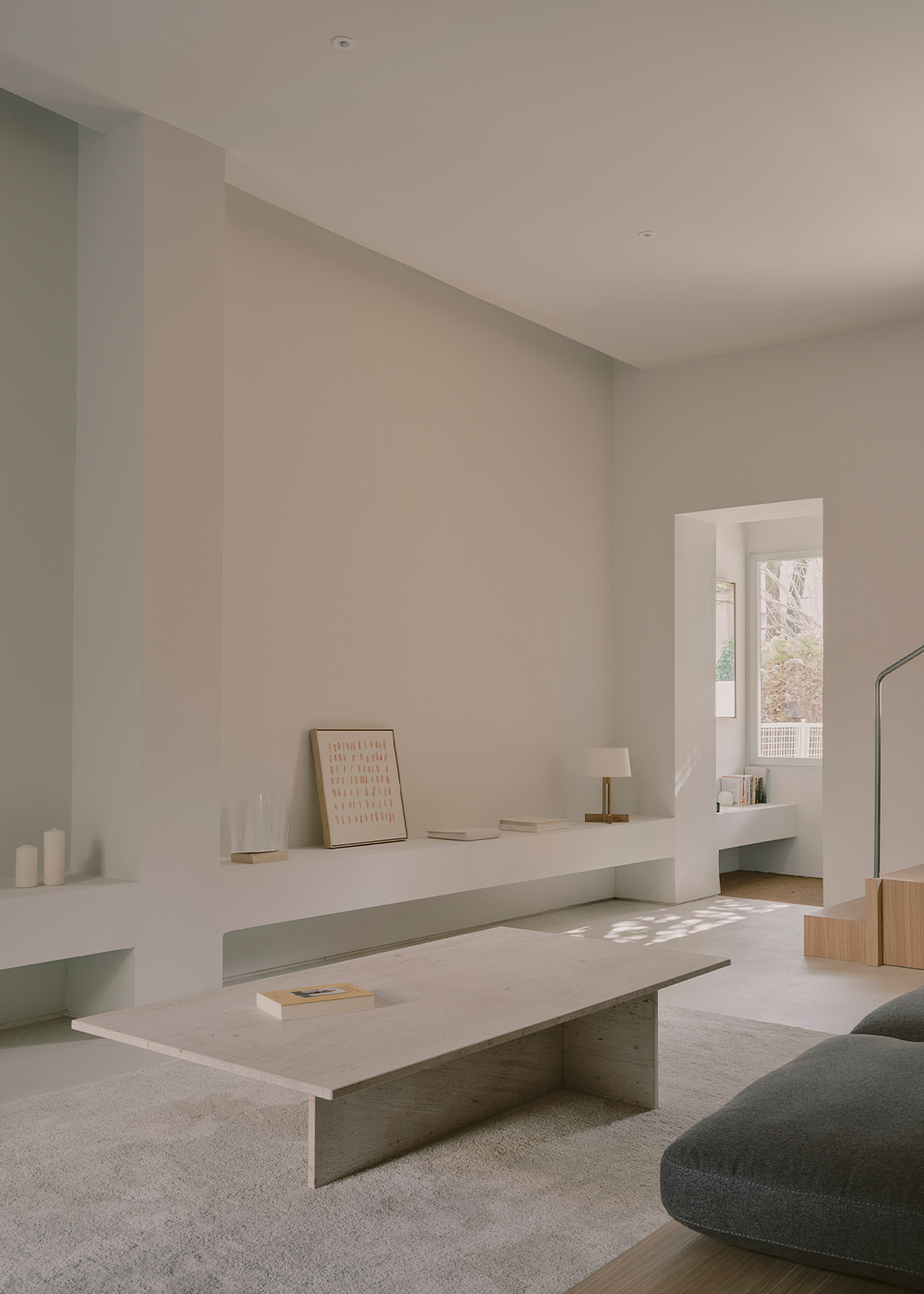
The intervention unfolds as a careful balance between continuity and transformation. A neutral palette of materials frames the architecture, establishing a calm and cohesive backdrop against which specific elements are allowed to emerge with clarity. This restrained approach reinforces the spatial qualities of the house while emphasizing light, proportion, and material texture as primary design tools.
Organized vertically, the upper floors are defined by clean architectural lines and a measured sense of order. These spaces are softened by the presence of wood—introduced through furniture and paneling—which brings warmth and tactility to the otherwise precise composition. The resulting atmosphere is shaped by a quiet dialogue between rigor and comfort, where each element contributes to a sense of understated domesticity.