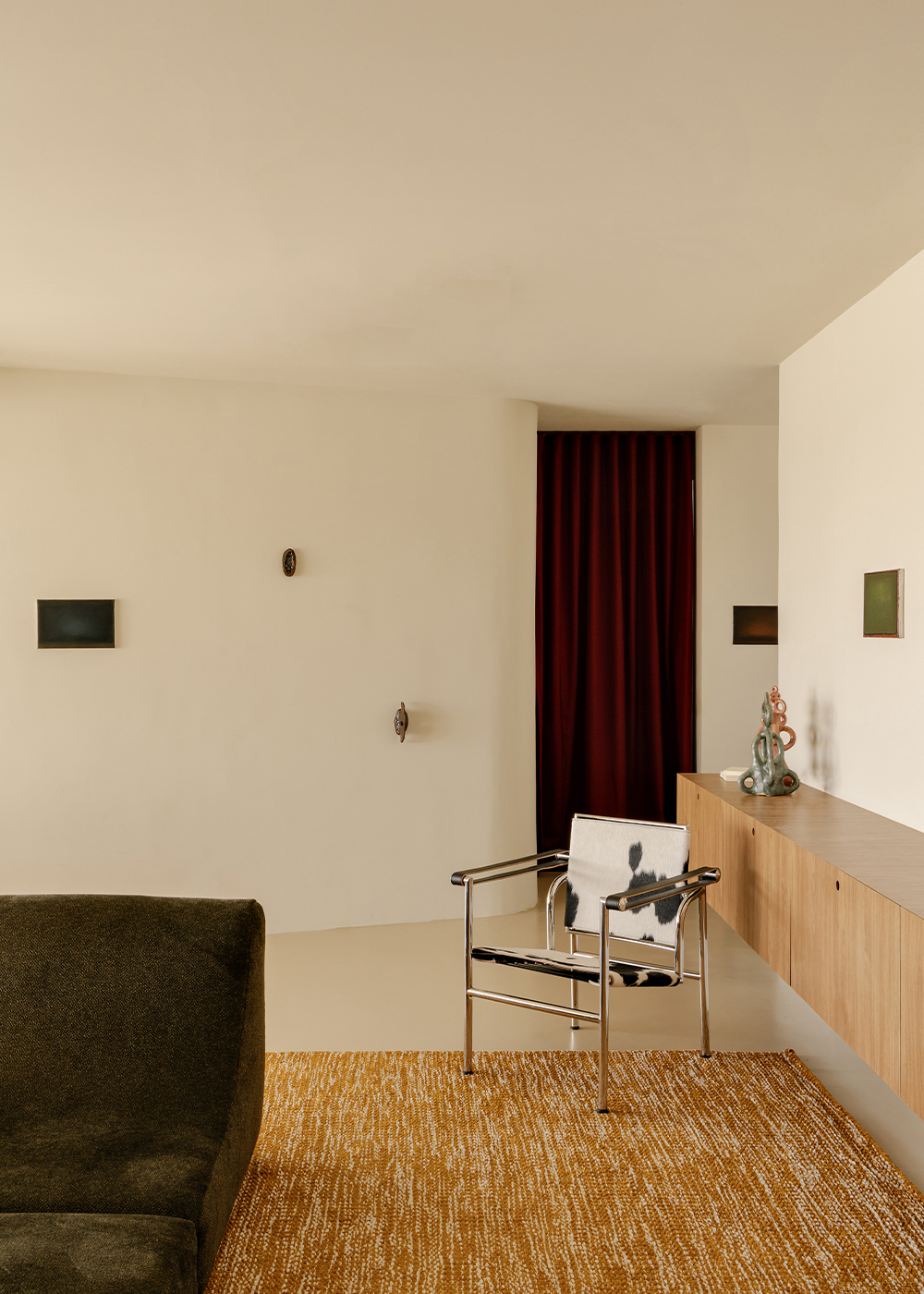
Light, almost white, made of few textures, with something distant about it, as if a house imagined by the sea had somehow found its way into the metropolis. But little by little, the city began to grow into it. What was once neutral gained density, shadows, curves and gestures. The open living room and kitchen welcome, while a long stretch of cabinetry conceals and reveals small niches along the way, like little pauses within a continuous surface.
The geometry reveals itself gradually. A diagonal wall draws the entrance into the house, while the acoustic curves escape towards the outside. Their rounded edges soften the encounters, almost as if shaped by sound itself. In the corridor, a red curtain closes off the intimate spaces like a theatre curtain, creating a passage between two worlds, the end of the first act.