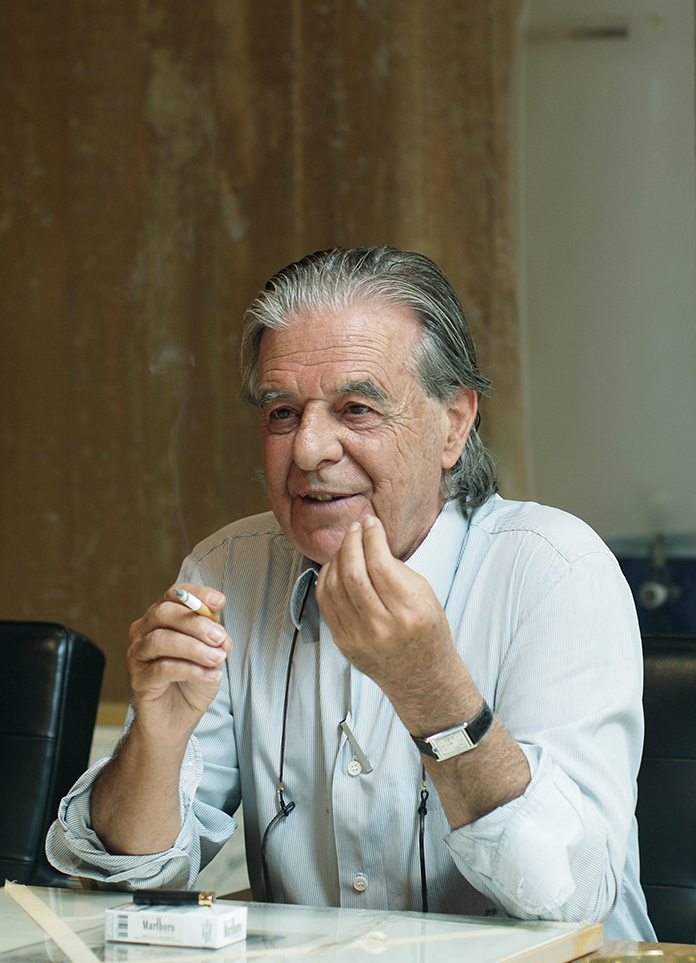
The home was designed by Studio Director Paul Conrad for himself, his wife and Studio Principal Katrina Conrad, and their two children Ollie and Eve. Malvern is a long-established suburb in Melbourne’s inner-East, in Australia. It’s known for its landscape character, family homes, and traditional high-street style shopping strips. It has a diverse architectural character ranging from large heritage homes to contemporary new houses.
The design direction and process were dictated by key ideas that are central to the studio’s design philosophy: 1. A holistic design process that considers architecture, interiors and furniture simultaneously. 2. The belief that interior architecture is the most important aspect of the design. This then influences both the exterior design and the interior design.
“My design process always centres around the interior architecture of the project—this is the part of the design process that connects architecture and interior design, and the part that I believe has the biggest impact on the end result,” Paul Conrad says. “The interior architecture describes the proportions, sizes, relationships, and views between interior spaces; it also considers how external windows and doors control the natural light in a space and how the proportions of these elements create mood and emotion.”3. Creating an aesthetic that is clearly contemporary yet influenced by aspects of classical and traditional architecture.
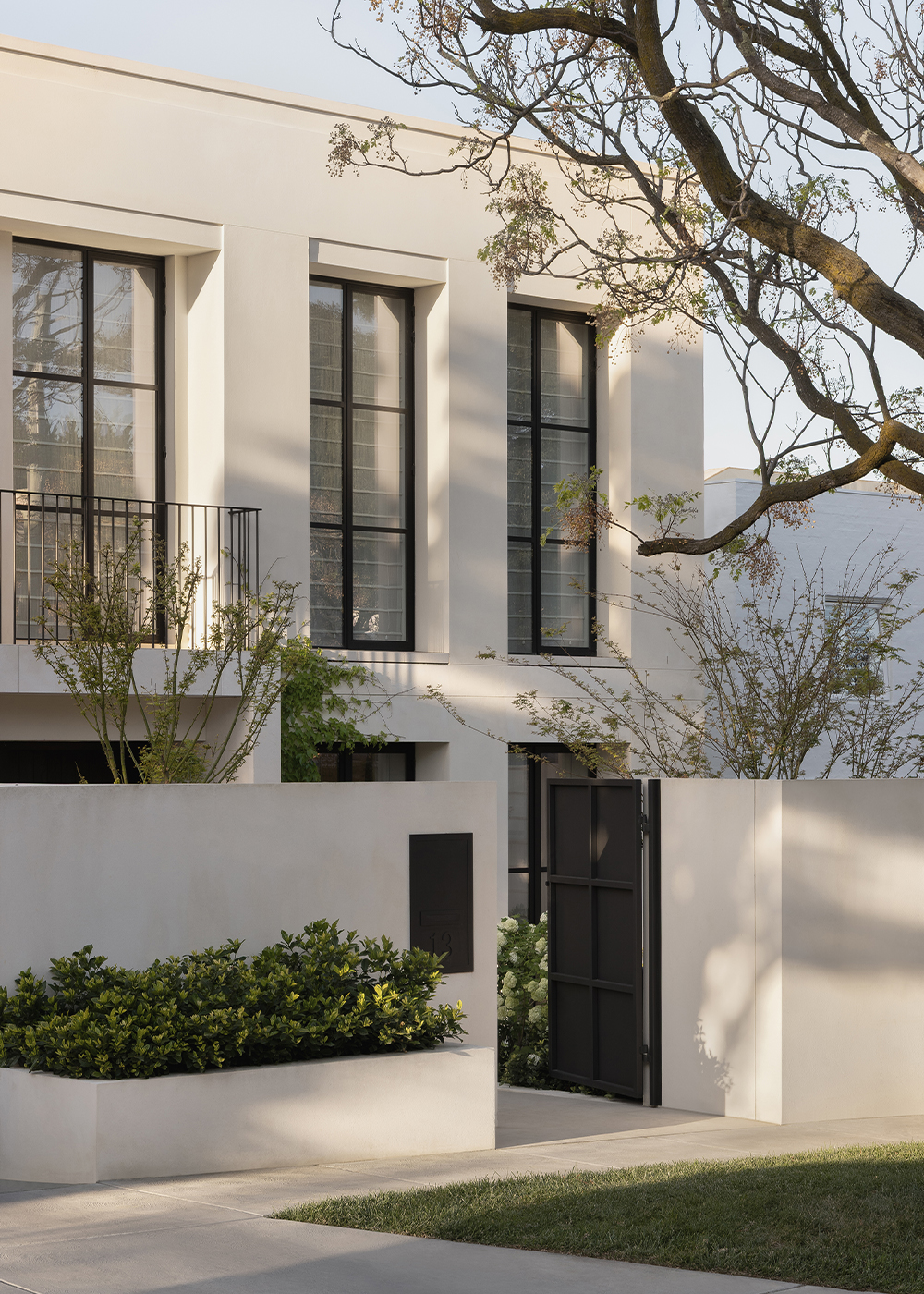
The façade is notable for its quietness; an elegant and robust street presence creates a sense of permanence. Although contemporary in expression, undertones of classical proportion and materials demonstrate a timeless design. In contrast to the studio’s signature approach of cladding the entire façade in natural stone, this home is covered in Boston Ivy; a limestone clad portal leading to the custom dark stained oak door becomes the only architectural element visible.
Conrad Residence embraces the natural character and richness that comes with age in materials to inherently introduce a degree of imperfection – an aspect Paul finds is “typically missing from much contemporary architecture that focuses on perfection,” he says. “Valuing the imperfection and maturation of materials culminates in a resilience of timeless interiors as the inevitable wear and tear from family life becomes another welcomed layer of patina.”
The overarching atmosphere of the house is one of contemporary elegance. However different spaces within the home have been designed with specific nuances that respond to their use. For example: Paul Conrad’s study adopts a more formal approach, utilising tall steel-framed French doors to emphasise elegant vertical proportions. The space functions as part library and part gallery, acting as a retreat to nurture creativity and Paul’s design process.
The primary living, dining and kitchen area purposefully transitions to a more contemporary, open and casual feel, utilising floor-to-ceiling aluminium sliding doors to embrace the northern aspect, maximize sun penetration, and achieve a seamless flow from inside to out. The oversize kitchen bench and custom designed brass pendant are the focal point of the space.
The primary bedroom suite (bedroom, ensuite and walk-in-robe) focuses on rest and relaxation. The dark accents that appear in the other spaces are removed to simplify the palette back to light oak and linen. Steel-framed windows return to add a degree of timeless simplicity – all enhancing the atmosphere of rest and rejuvenation.
公开 不公开