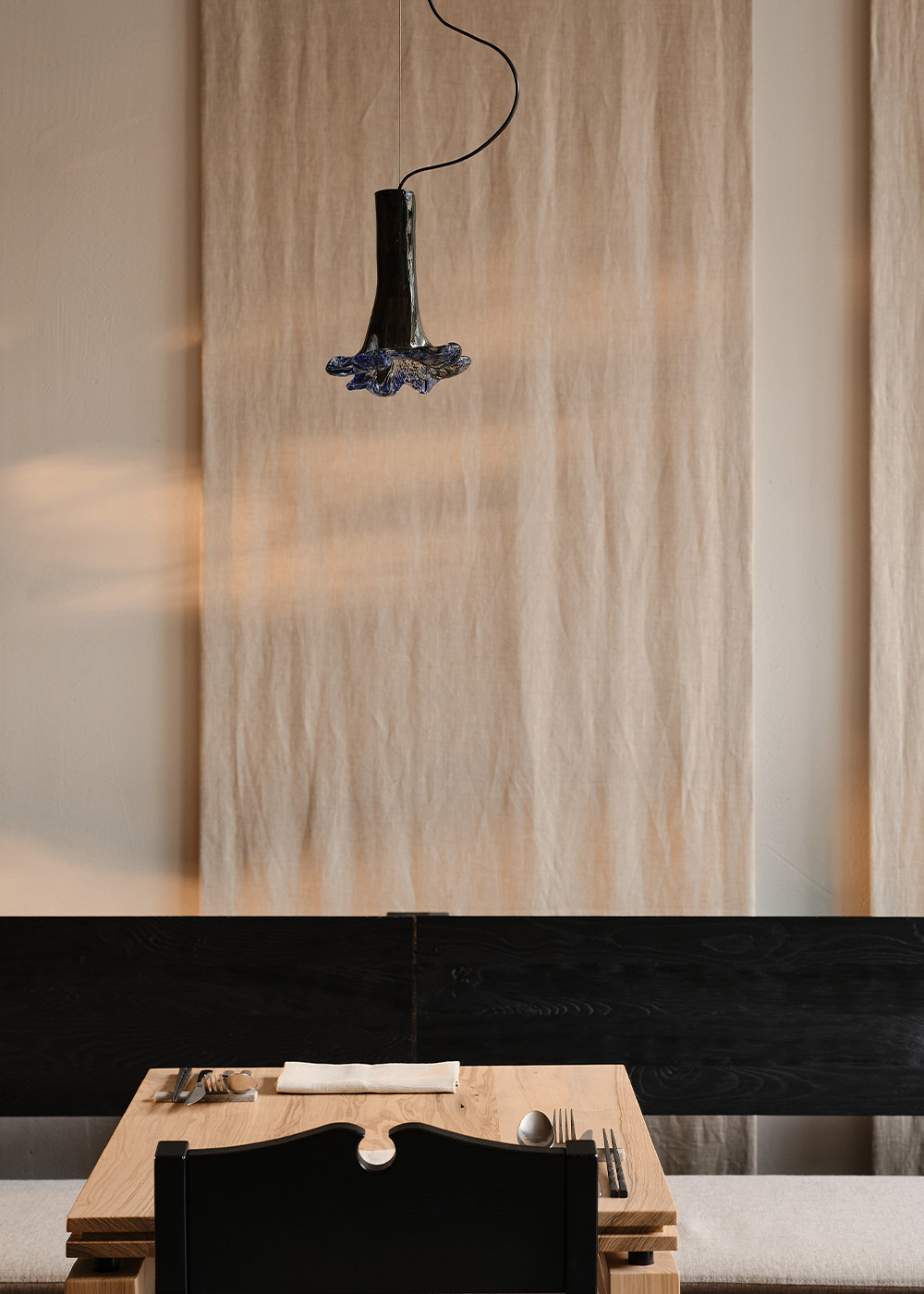
Salt is a renovation project where local materials, vintage objects, and preserved structural elements create a dialogue between past and present. To work more precisely with the context, we temporarily moved to Kaliningrad, gathering tactile and visual details for the interior from markets, workshops, and everyday explorations of the city. Found objects and elements with history became the emotional foundation of the space. This approach shaped a contemporary interior in which the depth of the place and its connection to the past remain clearly present.
Sol is a renovation built on a dialogue of cultures and respect for place. We preserved the emotional core of the space and gave it new depth through material and light. Asian contemplation and European expressiveness became two poles around which we built architectural balance.
The interior is based on locality: every material has real provenance and its own history. Kaliningrad ash, handmade ceramics, and found beams are not decorative—they are meaningful. Their presence restores authenticity and cultural connection to the land.