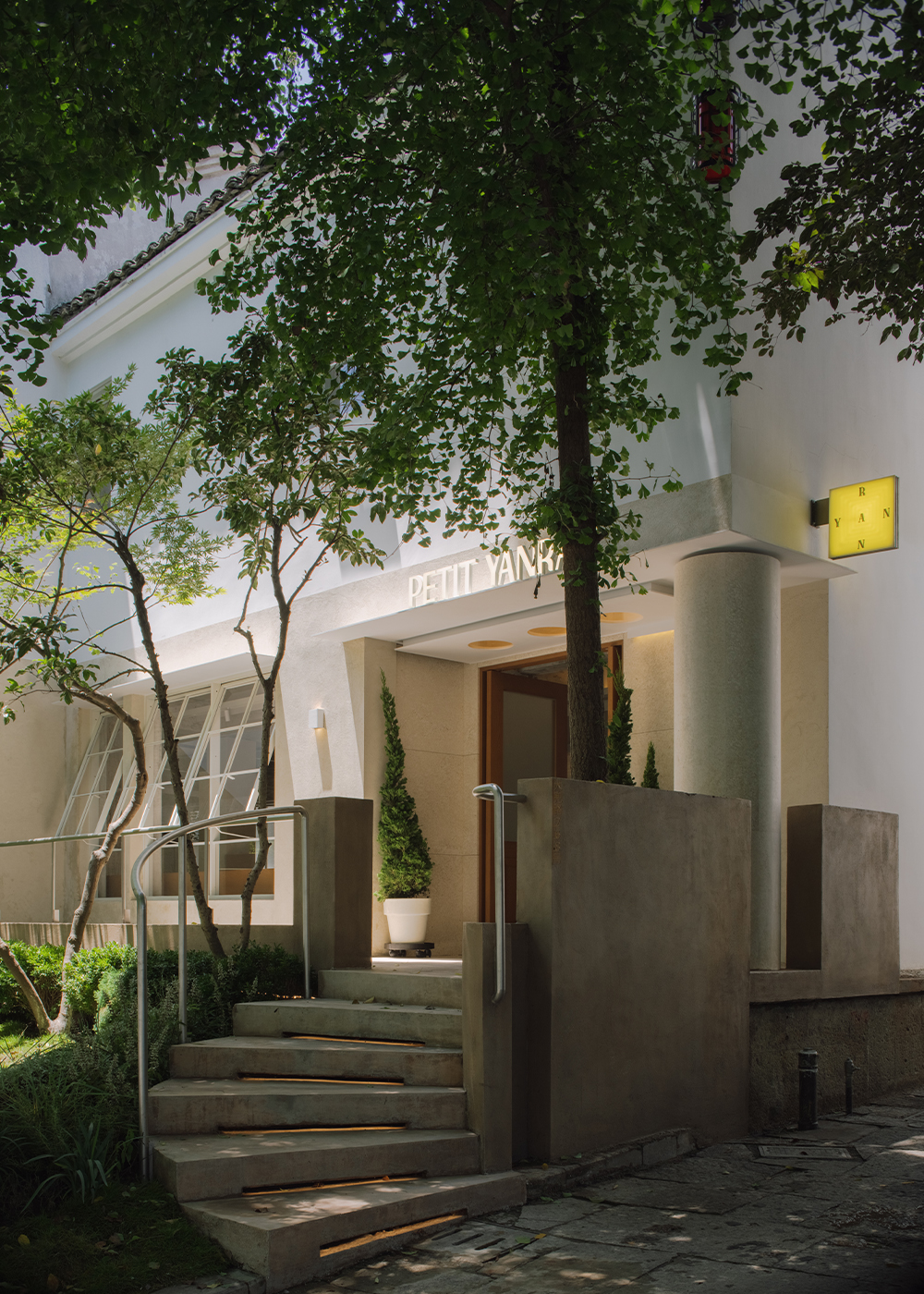
Most commercial spaces are all doing the same thing: trying to be seen. It’s almost a given. In an environment where attention is scarce, vision becomes the most direct way to compete. Shops along the street send out signals through their facades, lighting, and displays. But the true experience of dessert lies not in this moment. It happens more after sitting down, after the first bite, when your attention slowly withdraws from the outside world. This is the moment we care about.
A space is typically perceived on three levels: first, it is seen; second, it is used; and finally, it is experienced. In this project, we focus more on the third.
PETIT YANRAN is located in an old building within the Dadou Road Historic and Cultural District in Hangzhou. The neighborhood has a relatively relaxed rhythm, yet shops along the street still commonly rely on visual reinforcement to attract attention. Instead of joining this competition blindly, we hold a different belief: how a space is seen matters more than whether it is seen. We prefer to let the space be perceived in a more understated way—not through strong visual stimulation, but through an overall atmosphere and rhythm that invites people to want to enter.