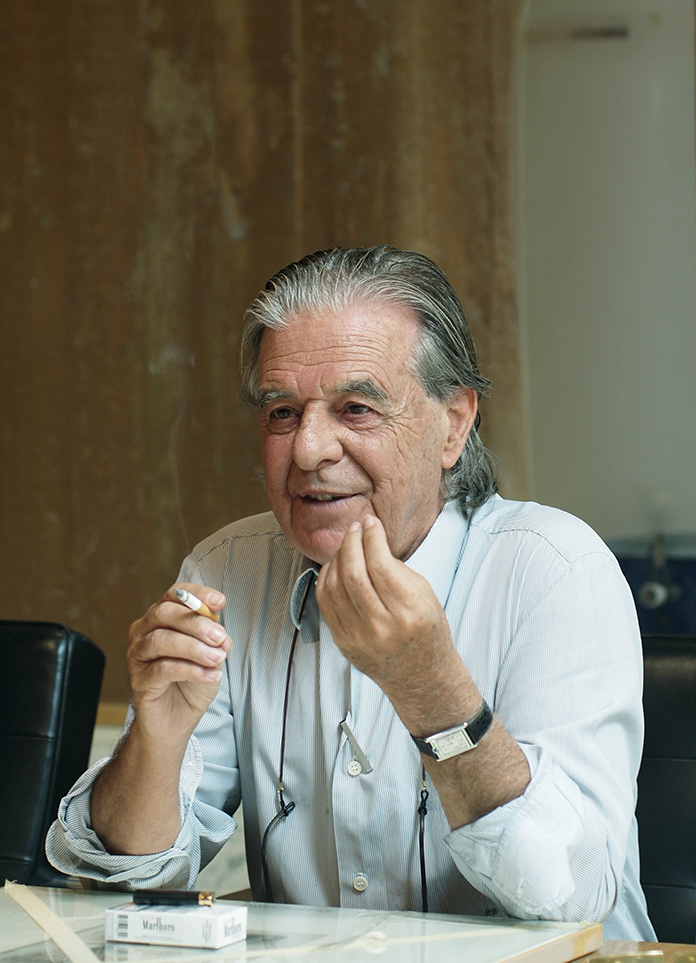
In Szymon Keller’s design practice, space is not only a synthesis of form and function, but also a way of understanding local culture, historical memory, and identity. As a designer deeply attuned to cultural context, he consistently looks to the stories embedded within a place as the starting point for his work, translating history, tradition, and contemporary life into spaces with a distinctive character.

He believes that “design should not begin with a preconceived aesthetic, but return to the true cultural roots of a place.” This philosophy finds its full expression in the design of Palacio Godoy. Faced with a palace steeped in centuries of history, Szymon Keller does not seek to recreate historical styles. Instead, he uses contemporary design to re-establish the connection between space and culture. In our conversation, he shares his understanding of the relationship between culture and design, and how he seeks to strike a balance between historic heritage and contemporary experience.

Moving into the common areas, the lobby becomes a stage where art takes center place. A monumental solid-wood sculpture by Thierry Job anchors the space, while traditional Montehermoso hats- crafted by Maria José González Ron- cero, the last artisan preserving this heritage, add a unique cultural signature.

The lobby's design extends beyond its art. The flooring itself becomes part of the storytelling, a handcrafted clay tile in two earthy tones, laid in a checkered pattern. This motif, repeated across the common areas, was inspired by the heraldic shield of the palace, grounding the space in history while giving it rhythm and texture.
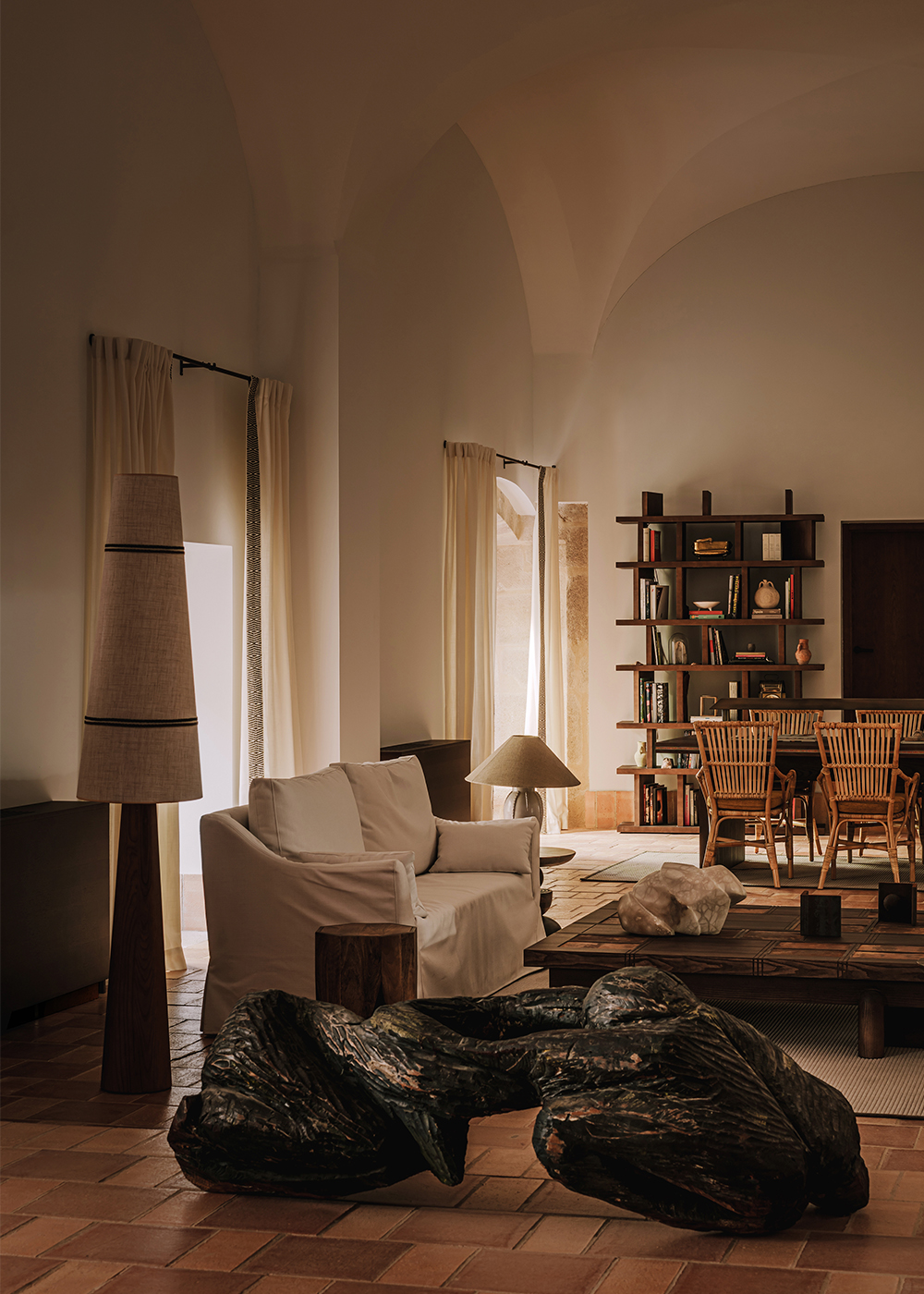
The interiors combine local materials with Peruvian geometry and craftsmanship, blending terracotta ceilings, bold art, and reimagined cloisters. The glass- covered courtyard retains an open feel, with ochre textiles, carved wood, and wicker lamps evoking Peru's warmth. Amid Renaissance pillars, handmade planters and artisan details create a dialogue between history and contemporary design.

The restaurant offers two contrasting yet connected atmospheres. One is intimate and warm, wrapped in walnut wood and earthy tones, with a home- like buffet and a painting by Pedro Oliver adding quiet drama. The other opens to the inner garden, bright and airy like a greenhouse, with raffia walls, lush plants, and furniture blending Peruvian geometry with Castilian tradition, creating a space rooted in history yet full of life.

The design concept of the bar is rooted in the tornaviaje - the voyage outwards and the return home. Godoy's experiences in Peru inspired a dialogue of contrasts: Extremadura's granite, wood, and clay set against Peruvian geometry, color, and textile richness.

The Bar is bold and expressive, blending deep tones, wooden sculptures, and Peruvian- inspired motifs. Terracotta vaults warm the space, where art and architecture meet in harmony. Niches host glowing works by Gorka Chillida, Szymon Keller and Lucia Vallejo, while the wooden back bar crafted with temple- like details displays vintage glass bottles like precious artifacts.

The common areas blend the palace's stone and vaults with a warm reinterpretation linking Peru and Extremadura. Wooden finishes and geometric details enhance the dialogue between past and present. Artisan mirrors, Szymon Keller's studio- designed pieces like the green Lung 1.0 table, and vintage finds such as a Balinese daybed enrich the atmosphere, where historic architecture and contemporary design coexist in harmony.

The rooms unfold like private sanctuaries. Entry is wrapped in shadow, intimate and enclosed, before opening into light and richness. Peruvian- inspired geometry appears in ceramics, textiles, and carpentry, intertwined with Castilian traditions.

Bathrooms are conceived as sculptural spaces, with stone basins carved by local artisans and wooden paneling creating an intimate, cabin-like feel. Lantern-style lights evoke a sense of travel and connection between continents, making each bathroom an essential part of Godoy's story, a warm counterpoint to the bright, open bedrooms.

The terraces open onto spectacular views of Cáceres' Old Town, with the Santiago bell tower and the evening flight of swallows animating the skyline at sunset. Here, the weight of the stone tower contrasts with lighter gestures: teak sofas, large dining tables, iron details, ceramics, and Peruvian textiles that bring color and warmth.

The terrace unfolds like a private garden, embraced by the stone walls of the palace itself. The palette of textures and tones from the architecture continues here, blending seamlessly with a curated selection of local plants and trees, shrubs, perennials, olive trees, and citrus. The result is an atmosphere that feels more like an intimate garden retreat than a shared common space.

MORE PHOTOS