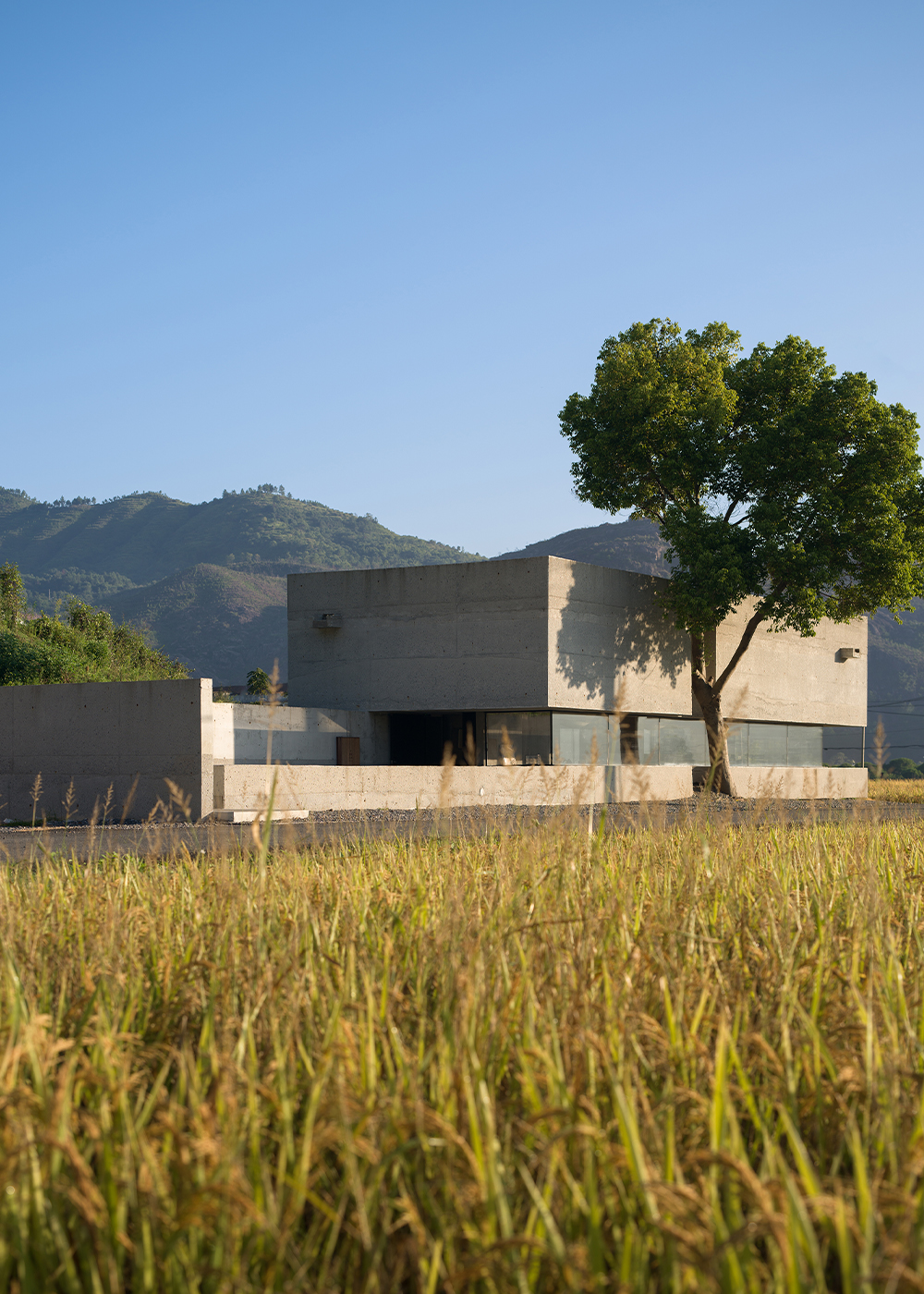
Amid rapid urbanization, the relationship between architecture and nature has grown increasingly tense. Yet, nestled in the vast rice fields, this small fair-faced concrete building of just over 80 square meters reinterprets the possibility of symbiosis between humans and nature as a "hand-whisked matcha tea house". With the core philosophy of "humble intervention", the building naturally indents to make way for the existing big tree on the site, embodying the Eastern wisdom of "not contending".
The exterior features bush-hammered fair-faced concrete as the main material, presenting a rough texture like a natural boulder. The whole structure floats on a still water surface, blurring the boundaries between architecture and reflection, man-made and nature. It also skillfully isolates road disturbances, returning the full view to the rice fields. The interior adopts a sunken layout, combined with the elevated peripheral water surface, which naturally filters out the noise of the surrounding environment. Sitting indoors, customers can look over the water and fully immerse themselves in the ever-changing rice field scenery through the four seasons.
Light and shadow become "another designer" in the space. Multiple skylights set on the top are not only light passages but also recorders of time. Sunlight projects on the concrete walls at different moments, forming dynamic light and shadow pictures. When the tea master hand-whisks matcha, the movements intertwine with light and shadow, elevating the tea ceremony into a spatial art performance and strengthening the spirituality and immersion of the tea-drinking process.
Materials are selected to be extremely pure, with cast-in-situ fair-faced concrete as the main body, and bush-hammered treatment highlights the original texture of the material. The roughness of concrete, the delicacy of matcha powder, and the simplicity of ceramic tea sets form a subtle dialogue, jointly conveying the natural aesthetics of "without deliberate carving". Redundant decorations are abandoned in the interior design, making materials, light and shadow, and landscape the protagonists. This "subtractive" attitude ultimately guides people's experience toward connection with nature, highlighting the focus and tranquility required for hand-whisked matcha.
The most impressive design move of the project lies in the relationship between architecture and the big tree. The tree is not an obstacle to be removed, but the starting point of design. The architecture "makes way" for it, while the tree provides shade and landscape for the architecture, forming an equal symbiotic relationship between the two. This also metaphorizes the spirit of "harmony, respect, purity, and tranquility" in the tea ceremony — oriented not by conquest, but by coexistence.
With its humble stance, this matcha tea house answers the proposition of the relationship between contemporary architecture and nature. It gains symbiosis with the tree through "concession", integrates with the rice fields through "sinking", and records the footprint of time with "light". Eventually, the architecture is complete with function, and the space embodies the soul with the tea ceremony, becoming a contemporary tea garden that leads people to return to their inner selves. A tranquil tea garden is more than just a space for drinking tea; it is a meditative experience conspired by architecture and nature.
公开 不公开